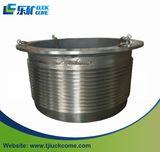
Bowl and bowl liner: two different parts
The distinction this page exists to make is the one that causes real ordering mistakes. The bowl is the structural bowl body — the large component that carries the liner, connects to the crusher's adjustment system, and transmits crushing load into the frame. The bowl liner is the manganese wear liner seated inside it — the concave-side surface the rock actually crushes against, and a consumable with a planned change-out cycle. A plant that orders a 'bowl' when it needs a liner has bought a structure it will store for a decade; a plant that orders a liner when its bowl seat is damaged has bought a liner that will crack. The two pages are kept separate for exactly this reason: the liner, its seating and its backing are covered on the bowl liner page; the bowl as a component — its duties, its recorded position and its failure modes — is covered here.
What the bowl does
The bowl closes the top of the crushing chamber. It carries the concave on its inner face, and its connection to the frame — a thread or a clamping arrangement, depending on the design — is also the setting adjustment: rotate or reposition the bowl and the closed side setting changes. On our multi-cylinder hydraulic machines a hydraulic motor performs that rotation. Every crushing load the concave receives passes through the bowl into the frame, so the bowl is a load-path structure, and its seats and adjustment surfaces are precision surfaces in everything but name: a bowl whose liner seat is worn or scored cannot hold a new liner still under load, and a bowl whose adjustment thread is damaged cannot hold a setting.
The recorded position for bowls
Bowl components are a recorded line in this catalogue — recorded against one size. The mining crusher spares bowl for HP400 is the listed bowl line, recorded against the HP400 only; bowl components are not recorded against the GP series, Symons, any other Metso-family size or the Sandvik family. Alongside that recorded line, the catalogue lists a general bowl line for cone crushers: bowls for other machines — including our own crushers — are supplied against the crusher model and the original part number, and a bowl enquiry for any size other than the HP400 follows that identification route rather than assuming coverage from the recorded line. Fit for bowl components is confirmed against the part number before dispatch, because the bowl's interfaces — liner seat, adjustment thread or clamp faces, frame register — are the part.
When the bowl itself needs attention
Bowls are not wear parts, so bowl work is event-driven: a liner seat worn or damaged after a liner ran through; adjustment threads or clamp faces fretted after seasons of setting changes under load; cracking after a severe tramp event that the release system could not fully absorb. The checks belong to the liner change-out the plant already does — seat condition read while the bowl is open and the liner is out — because that is the one moment the bowl's working surfaces are visible at no extra downtime. If the assessment says the bowl needs work beyond the seat, the enquiry belongs with the spare parts programme or the repair services team, with photographs and dimensions sent first.
Ordering bowls and bowl components
Identify the bowl by crusher model and original part number; dimensioned photographs of the seat and adjustment surfaces resolve most remaining doubt. Minimum order is 1 piece, confirmed with your quotation, as is the lead time — cast-to-order bowls carry their production time on the quote. Shipment on FOB, EXW, CIF or FCA terms; payment by T/T or L/C. Certificates available upon request. If the job is a relining rather than a bowl replacement, you are on the wrong page — the bowl liner page is the one you want, and ordering the two together on one enquiry is welcome when both genuinely need doing.
| Part | Bowl (structural bowl body) and bowl components — distinct from the bowl liner, the wear liner seated in it |
|---|---|
| Recorded line | Bowl components — recorded against the HP400 only; not recorded against the GP series, Symons, any other Metso-family size or the Sandvik family |
| Identification | Crusher model + original part number; seat and adjustment-surface photographs |
| Minimum order | 1 piece, confirmed with your quotation |
Ordering a bowl? Send the model and part number first
Identify the bowl by crusher model and original part number; dimensioned photographs of the liner seat and the adjustment surfaces resolve most remaining doubt, and fit is confirmed against the part number before dispatch. Minimum order is 1 piece, confirmed with your quotation, as is the lead time (typically within 15 workdays in peak season and about one month in the off-season). Contact Angela Ren of the Import & Export Department at the company sales email [email protected] or by mobile on +86 137 5230 3055.