Primary crushing, without drama
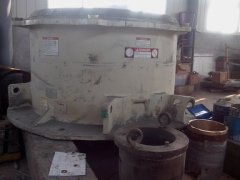
The primary jaw crusher has the least forgiving job in the plant. It takes blasted or excavated feed at the largest top size, with tramp, fines and moisture mixed in, and must reduce it to a size the secondary cone crusher can accept — day after day, with the entire plant's throughput queued behind it. Our jaw crushers are designed around that duty: a robust frame and jaw assembly, a crushing chamber shaped for the nip angle hard rock demands, and a discharge adjustment that crews actually use. The double-wedge adjustment system replaces shim stacks with a firmer, faster mechanical adjustment, so the closed side setting that the flowsheet assumes is the setting the machine is genuinely running.
Where our jaw crushers work
The line is specified for quarries crushing granite, basalt, limestone and river rock; for mining operations on primary ore reduction; and — a duty many jaw crushers dislike — for construction and demolition recycling, where feed is slabby, contaminated and variable. In recycling service the chamber and jaw plate tooth profile matter as much as power: plates must grip slabs instead of letting them ride, and the crushing chamber must pass rebar-laced material without packing. Tell us your feed honestly — including the parts of it that are not rock — and the configuration we quote will be the configuration that handles it.
The wear parts behind the machine
A jaw crusher purchase is really a jaw plate programme with a machine attached. Plates are the dominant running cost, and they are supplied from the same factory: see the jaw crusher parts range for fixed and swing plates, pitman assemblies and adjustment components, all with a minimum order of 1 piece, confirmed with your quotation. Because machine and plates come from one source, plate profile development follows the machine's chamber exactly, and profile changes recommended from wear patterns on your site are cast into the next set rather than approximated.
Support and specification
Alongside the machine we offer technical consultation, system design, installation support, commissioning, maintenance and operator training — the services listed across our equipment range. To specify a jaw crusher, send the feed material and top size, the target product size for the next crushing step, and the required capacity. We will recommend a model and chamber configuration with capacity stated under declared feed conditions, and quote the machine with its first wear set and critical spares as one package. Delivery terms are FOB, EXW, CIF or FCA, payment by T/T or L/C. Certificates available upon request.
| Duty | Primary crushing — hard rock, ores, recycled material |
|---|---|
| Adjustment | Double-wedge discharge opening adjustment |
| Wear supply | Jaw plates & pitman parts, MOQ 1 piece, confirmed with your quotation |
| Services | Design, installation, commissioning, maintenance, training |
What a good specification conversation covers
Jaw crushers are sometimes bought on feed opening and motor size alone, and then blamed for a flowsheet they were never told about. Our specification process asks the questions that decide success: What is the feed — drilled and blasted rock, ripped material, or demolition waste with rebar and timber in it? What top size genuinely arrives, including the oversize the excavator will inevitably pass? What must the discharge be for the secondary crusher's feed opening to accept it without a grizzly bottleneck? And what does the site expect in tonnes per hour at that duty, in the season when feed is wettest? Answers to those four questions produce a chamber, plate profile and setting recommendation that holds up in production. If some answers are estimates, say so — a crusher specified honestly for a range of feeds outperforms one specified precisely for a feed that never arrives.
Send us your part number or drawing
Quotes are prepared against your model, part number or dimension drawing. Minimum order is 1 piece on most catalogue parts — like the current lead time, it is confirmed with your quotation (typically within 15 workdays in peak season and about one month in the off-season). Contact Angela Ren of the Import & Export Department at the company sales email [email protected] or by mobile on +86 137 5230 3055.